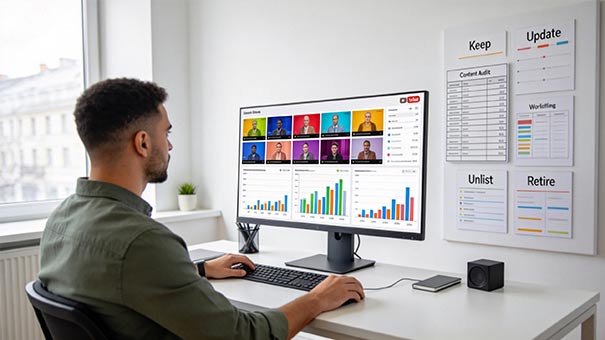
YouTube Channel Growth Tips for Small Creators: What Actually Works


By Freya Zhan
Article type: Evergreen creator strategy guide
Updated: March 2026
Category: Channel Strategy
Editorial note: This article is published by GeevenTech, an independent editorial website. It is not affiliated with, endorsed by, or officially connected to YouTube, Google, or AdSense. The guidance below is educational and editorial, not legal, financial, tax, business, or official platform advice.
Small YouTube channels usually do not stall because the creator is lazy, untalented, or missing one secret tactic. More often, the channel is difficult to understand quickly: the topic is too broad, the title and thumbnail do not make one clear promise, the opening takes too long to deliver value, or the viewer cannot tell why they should return.
For small creators, YouTube growth usually starts before subscriber growth looks impressive. The earlier signs are often clearer packaging, more qualified clicks, longer average view duration, stronger watch time per upload, and more returning viewers. Those signals do not guarantee growth, monetization, YouTube Partner Program acceptance, or income. But they are usually better diagnostic signals than raw subscriber count alone.
This guide focuses on what small creators can actually improve: topic clarity, packaging, retention, channel positioning, repeat viewer behavior, and realistic promotion habits. It does not promise viral growth. It does not claim that every channel should follow the same format. It is a practical framework for making a small channel easier to click, easier to watch, and easier to understand over time.
For a companion piece on long-term channel clarity, see Why Some YouTube Channels Develop More Clearly Over Time.
Utility Box
Best for: small YouTube creators trying to improve channel clarity, CTR, retention, and repeat viewer behavior
Main question answered: what should a small creator fix first when growth feels slow?
Core answer: narrow the topic promise, simplify the title and thumbnail, strengthen the first 30 seconds, and review viewer response before chasing advanced tactics
Not about: guaranteed growth, YPP approval, AdSense approval, viral formulas, or income promises
Primary metrics discussed: impressions click-through rate, average view duration, watch time per upload, returning viewers, subscriber conversion, and audience fit
Use with caution: channel analytics vary by niche, traffic source, topic, audience maturity, upload history, and content format
Article Directory
- What small YouTube growth actually looks like
- The metrics that usually matter first
- Why channel positioning affects growth
- How to improve CTR without clickbait
- How to improve retention without overproduction
- Decision framework by stage
- Common mistakes small creators should avoid
- FAQ and next steps
What This Article Does Not Claim
This article does not claim that following these steps will guarantee YouTube growth, monetization approval, stronger RPM, higher CPM, AdSense approval, or any specific income result.
It does not claim to explain YouTube’s recommendation system from the inside. Where this article discusses platform-facing metrics, it uses public creator-side concepts and editorial interpretation rather than official internal knowledge.
It also does not encourage artificial traffic, fake engagement, misleading thumbnails, clickbait, paid views, ad-click manipulation, or any attempt to game YouTube or Google advertising systems. For platform-sensitive topics, creators should review official sources such as YouTube’s guide to YouTube Analytics, YouTube’s impressions click-through rate FAQ, the YouTube Partner Program overview and eligibility page, and YouTube’s channel monetization policies.
Who This Article Is / Is Not For
This article is for small creators who are still trying to make their channel easier to understand, easier to click, and easier to keep watching.
It is especially useful if your channel is in one of these stages:
- you have fewer than a few thousand subscribers and are not sure what to fix first;
- your videos get impressions but weak clicks;
- viewers click but leave early;
- some videos perform better than others, but you cannot explain why;
- your channel covers several topics and now feels hard to describe;
- you are thinking about monetization but your audience fit is still unclear.
This article is less useful if your channel already grows mainly through celebrity recognition, a large off-platform audience, personality-driven entertainment, live-event demand, or formats where viewers come primarily for spectacle rather than clarity.
It is also not written for creators looking for shortcuts. If your main question is how to make YouTube growth automatic, this article will probably feel slower than you want. The point here is not to find a trick. The point is to remove the few frictions that often stop a small channel from becoming understandable.
Author and Editorial Context
Freya Zhan writes for GeevenTech on small-creator growth, monetization diversification, audience fit, channel positioning, retention logic, and creator business models beyond ad revenue. That matters for this article because early-stage channel growth is not only a traffic problem. It is also a clarity problem.
A video can earn views without building a clearer channel. A trend can bring attention without improving audience fit. A topic can look commercially attractive but still fail if the viewer cannot understand what the channel repeatedly offers.
This article is therefore framed as creator-side editorial analysis: what small creators can observe, compare, and improve before assuming that the platform, niche, or algorithm is the only problem.
What YouTube Channel Growth Actually Looks Like for Small Creators
A lot of small creators measure growth too narrowly. They look at subscriber count first and assume it tells the whole story.
Subscriber growth matters, but it is often a lagging signal. A channel may start becoming healthier before the subscriber count changes dramatically. Earlier signals can include:
- more qualified clicks;
- stronger average view duration;
- better watch time per upload;
- clearer returning-viewer behavior;
- more specific comments;
- stronger topic-to-viewer fit;
- better subscriber conversion on videos that match the channel promise.
One anonymized small education channel had under 1,000 subscribers and did not appear to be growing quickly at first glance. Over an eight-week review window, subscriber growth stayed modest, but average view duration improved from 2:11 to 4:06 on comparable uploads, and returning viewers rose across newer videos. The channel had not “taken off.” But the audience fit had become stronger. Within the following month, one video began receiving more suggested traffic than earlier uploads on similar topics.
This is not proof that higher average view duration automatically causes suggested traffic. It is a creator-side pattern, not a controlled experiment. But it shows a useful sequence: visible growth often appears after the channel becomes easier to understand and easier to watch.
Small creators often miss that middle stage. They ask, “Why am I not growing?” when the better first question is, “Are the right viewers clicking, staying, and recognizing the channel yet?”
Data Note: How the Case Patterns Should Be Read
The examples in this article are anonymized creator-side review patterns. They are simplified to protect privacy and make the strategic point easier to understand. They should not be read as universal benchmarks, controlled tests, platform guarantees, or proof that the same change will produce the same result on another channel.
The numbers included here are useful because they show direction, not because they create a formula. A CTR increase, a retention improvement, or a stronger returning-viewer pattern can mean different things depending on traffic source, topic, video length, audience expectations, and how much data is available.
YouTube itself notes that impressions click-through rate can vary based on content type, audience, and where the impression appears. That is why small creators should compare videos carefully over time rather than treating one number as a verdict.
The Metrics That Usually Matter First
Small creators do not need to obsess over every graph inside YouTube Studio. In most early-stage channel reviews, a few metrics usually explain more than a large dashboard does.
The useful question is not “Which metric is most important?” It is “Which metric explains the current bottleneck?”
Impressions Click-Through Rate
Impressions click-through rate, usually shortened to CTR, helps you understand whether your title and thumbnail are giving viewers a clear reason to click after a registered YouTube impression.
CTR should not be read in isolation. A higher CTR with weak retention can suggest curiosity without satisfaction. A lower CTR on a video with broad Home Page exposure may not mean the packaging is broken. Traffic source matters.
Still, for small creators, weak CTR often points to one of three problems:
- the topic is too vague;
- the title is not specific enough;
- the thumbnail is overloaded or visually unclear.
A useful anonymized case came from a tutorial channel publishing a video about beginner YouTube analytics. The topic was receiving impressions, but viewers were not clicking at a healthy rate compared with the channel’s own nearby uploads. The original thumbnail used too much text and tried to communicate three ideas at once. The creator rebuilt it around one promise and one visual contrast while keeping the topic almost the same. During the next testing period, CTR moved from 3.1% to 6.2%.
That does not mean every creator can double CTR by changing a thumbnail. It means the original packaging was making the topic harder to understand than it needed to be.
Average View Duration
Average view duration often reveals whether the viewer is receiving value quickly enough.
On one productivity-focused channel, several videos were around eight minutes long, but average view duration stayed around 1:40 to 1:55. The videos were not poorly edited. The main problem was sequencing. The openings spent too much time on background before reaching the actual point.
Later uploads began with the key takeaway first, then explained the context after the viewer understood why the video mattered. On comparable topics, average view duration improved by more than a minute.
That improvement should not be treated as a universal target. A one-minute gain means different things on a three-minute video, an eight-minute video, and a thirty-minute tutorial. The broader lesson is simpler: many small channels do not need more production first. They need to stop making viewers wait for the reason they clicked.
Returning Viewers
Returning viewers matter because they suggest the channel is becoming recognizable rather than merely discoverable.
A viewer can click once because a title is interesting. Returning behavior usually requires something more: the viewer understands what kind of help, perspective, entertainment, or experience the channel repeatedly offers.
Across small creator reviews, repeat viewership tends to improve when the channel can be described in one sentence. If the viewer cannot tell what the channel is for, subscription and return behavior often stay weak even when a few videos get decent views.
A small channel does not need a rigid formula. But it does need a recognizable reason to exist.
Subscriber Conversion
Many small creators ask how to get more subscribers. The better question is why a viewer would want the next upload.
A weak subscribe request says:
Please like, comment, and subscribe.
A stronger request gives the viewer a reason:
If you are building a small channel and want practical YouTube growth strategy without vague advice, subscribe — that is what this channel is built around.
The second version is not stronger because it is more aggressive. It is stronger because it names the channel promise.
On one small creator-focused channel, subscriber conversion stayed lower than expected even when some videos received decent views. The channel descriptions, homepage copy, and calls to action were generic. Once the positioning became clearer around practical growth advice for beginners, subscription behavior improved because the channel stopped sounding interchangeable.
A Content Strategy That Makes a Small Channel Easier to Grow
Many smaller channels are harder to grow than they need to be because their content direction is too loose.
A creator may post one video about YouTube growth, the next about freelancing, another about productivity apps, and another about AI tools. Each video may be reasonable on its own. The problem is that the channel becomes difficult to understand as a whole.
A better approach is to build around a tighter content cluster.
For example, instead of covering “creator business” broadly, a small channel could focus on:
- YouTube growth for beginners;
- title and thumbnail strategy;
- channel analytics for small creators;
- common mistakes first-time YouTubers make;
- content planning for solo creators.
This does not make the channel too narrow. It makes the value easier to recognize.
A marketing-oriented creator channel showed this problem clearly. The creator was posting about YouTube, remote work, AI tools, freelancing, and general productivity. Some videos received views, but subscriber conversion stayed weak and audience overlap was inconsistent. After the channel narrowed its positioning to “content growth for solo creators,” the next group of uploads performed more consistently. The videos were not instantly viral, but the channel became easier to understand.
That matters because small creators rarely win by being broadly interesting to everyone. They usually improve when the right viewer can recognize the channel faster.
For the monetization-side version of this problem, see What Small Creators Often Need to Fix Before Monetization Becomes Meaningful.
How to Improve Click-Through Rate Without Becoming Clickbait
A weak title and thumbnail can bury a good idea. This is one of the most common problems on smaller channels because creators often put most of their effort into the video itself and too little into how the video is introduced.
A title usually works better when it does one clear job. It should:
- name a specific problem;
- promise a specific learning outcome;
- speak to a defined viewer;
- or frame a recognizable change.
Compare these two titles:
Weak: YouTube Tips You Should Know
Stronger: 7 YouTube Growth Tips I’d Focus on First for a Small Channel
The second title is better because it tells the viewer who the video is for, what kind of help it offers, and why the advice is staged for a beginner or small creator.
The same principle applies to thumbnails. Smaller creators often overload thumbnails with too much text, too many arrows, too many facial expressions, or too many visual ideas competing at once. The result is not more information. It is more friction.
A cleaner thumbnail usually answers one question:
What is the viewer supposed to notice first?
If the answer is unclear, the thumbnail is probably trying to do too much.
A Safer CTR Rule
Do not chase CTR in a way that breaks viewer trust.
A title and thumbnail should make the video easier to understand, not more misleading. YouTube’s CTR guidance specifically warns creators not to rely on clickbait because videos with high CTR and low average view duration may fail to satisfy viewers.
For small creators, the safer goal is not “maximum curiosity.” It is accurate curiosity. The viewer should click because the packaging makes the real value clearer.
How to Improve Retention Without Overcomplicating Production
Many creators assume retention improves mainly through better editing, better cameras, faster cuts, or more polished visuals. Sometimes production quality matters. But in smaller channels, the first retention problem is often simpler.
The common issues are:
- a slow opening;
- too much context before value;
- repeated explanation;
- unclear section order;
- a mismatch between the title and the first minute;
- a lack of concrete examples.
A review-style channel had one recurring issue: the first 20 to 30 seconds were spent on a branded intro and general setup. The videos were not badly made, but viewers were being asked to wait too long before receiving the core takeaway. After the creator replaced the intro with a direct problem-first opening, the early retention line became healthier on later uploads covering similar topics.
Another small education channel showed a different issue. One video had a strong title and decent initial CTR, but retention dropped faster than expected. The problem was not the topic. It was repetition. The same idea was explained several times in slightly different wording before the video moved forward. In later uploads, the creator cut repeated explanation and replaced one abstract section with one concrete example. Viewer hold improved on comparable videos.
Most small channels do not need more editing first. They need cleaner sequencing.
A practical structure often looks like this:
- name the problem;
- explain why it matters now;
- give the first useful answer;
- show an example;
- warn against the common mistake;
- end with a clear takeaway or next step.
This structure is not creative in a flashy way. It works because viewers can feel progress.
The 3-Part Pre-Publish Check
Before publishing a video, small creators should run a simple check. This is not a guarantee of performance. It is a way to catch avoidable weakness before the video goes live.
1. Topic Clarity
Ask:
Can a beginner tell who this video is for?
If the topic is so broad that almost anyone could be the audience, the video may be too vague. Small channels tend to do better when the topic is framed for a specific viewer in a specific situation.
Weak topic framing:
How to Grow on YouTube
Clearer topic framing:
Why Your First 20 YouTube Videos Are Not Building Returning Viewers Yet
The second version does not need a bigger audience. It needs the right audience.
2. Packaging Clarity
Ask:
Do the title and thumbnail together promise one clear result?
If the title promises one thing but the thumbnail suggests three others, the packaging becomes noisy. If the thumbnail needs a paragraph of text to make sense, it is usually not simple enough.
Good packaging is not about being loud. It is about making the decision easier for the right viewer.
3. Retention Setup
Ask:
Does the opening give the viewer a reason to stay?
The first part of the video should confirm that the viewer clicked the right video. If the first 20 to 30 seconds are mostly branding, filler, greetings, or broad background, retention may suffer before the real content begins.
A small creator does not need to sound rushed. But the opening should show direction quickly.
Before / After: A Simple Upgrade Example
Here is what a small improvement cycle can look like before publishing.
| Element | Weak version | Stronger version |
|---|---|---|
| Title | YouTube Tips You Should Know | 7 YouTube Growth Tips I’d Focus on First for a Small Channel |
| Thumbnail | Five visual elements, too much text, no clear focal point | One short phrase, one visual contrast, one main promise |
| Opening | 20–25 seconds of branding and setup before the point | Problem first, then the result the viewer can expect |
| Channel fit | General creator advice | Practical growth advice for small YouTube creators |
| Viewer reason to return | Unclear | Clearer: this channel helps small creators make better publishing decisions |
The stronger version does not rely on more effort alone. It creates a clearer entry point. The viewer understands faster who the video is for, what it is about, and why staying is worth it.
That is often the difference between a video that receives impressions but underperforms and one that gives itself a real chance.
Decision Framework by Stage
Small creators often ask for one universal growth strategy. That is usually the wrong request. A channel with 40 subscribers, a channel with 800 subscribers, and a channel with 8,000 subscribers may need different fixes.
Use the stage framework below as a diagnostic tool.
Stage 1: The Channel Is Hard to Describe
Common signs:
- viewers cannot tell what the channel is mainly about;
- topics jump across unrelated categories;
- each video feels disconnected from the previous one;
- the homepage and video list do not communicate one clear promise.
Best first fix: channel positioning.
At this stage, do not start with advanced analytics. First, make the channel easier to describe. A simple channel sentence can help:
This channel helps [specific viewer] solve [specific type of problem] without [common frustration].
Example:
This channel helps small YouTube creators improve topic clarity, packaging, and retention without vague growth advice.
That sentence does not need to appear exactly on the channel. But the channel should behave as if it has one.
Stage 2: The Channel Gets Impressions but Weak Clicks
Common signs:
- videos appear to receive impressions;
- CTR is weak compared with the channel’s own comparable videos;
- thumbnails look crowded;
- titles are broad or generic.
Best first fix: title and thumbnail clarity.
Do not immediately assume the topic is bad. Sometimes the idea is fine but the viewer cannot understand the promise quickly enough.
Ask:
- Does the title name a specific viewer or problem?
- Does the thumbnail communicate one idea?
- Are the title and thumbnail saying the same thing?
- Would the right viewer understand the value in two seconds?
Stage 3: The Channel Gets Clicks but Viewers Leave Early
Common signs:
- CTR is reasonable;
- retention drops sharply near the beginning;
- comments suggest viewers expected something else;
- the opening contains too much setup.
Best first fix: opening structure.
The beginning should deliver orientation quickly. The viewer should know:
- what problem the video is solving;
- why it matters;
- what kind of answer is coming;
- why the video is not wasting their time.
A faster opening does not mean shouting. It means removing avoidable delay.
Stage 4: Some Videos Work, but the Channel Does Not Feel Stable
Common signs:
- occasional videos perform well;
- subscriber conversion is uneven;
- returning viewers remain weak;
- successful videos feel hard to repeat.
Best first fix: content cluster logic.
Look for the pattern behind the videos that work. Are they solving the same kind of problem? Serving the same viewer? Using the same format? Creating the same expectation?
If the answer is yes, repeat the pattern intentionally. If the answer is no, the channel may be getting isolated attention rather than durable audience fit.
Stage 5: Growth Exists, but Monetization Readiness Is Still Unclear
Common signs:
- the channel has more viewers than before;
- audience expectations are still inconsistent;
- the creator wants sponsors, memberships, affiliates, or YPP progress;
- the content does not yet show a stable editorial identity.
Best first fix: audience-to-revenue fit.
Do not rush monetization layers before the channel relationship is clear. A channel can have views without trust. It can have traffic without a clear buyer, member, sponsor, or repeat viewer path.
For the policy-side version of this issue, see What a Growing YouTube Channel Often Reveals Before Its Structure Becomes Clear.
How to Turn Viewers Into Subscribers
Small creators often treat subscribers as a reward for effort. In practice, viewers usually subscribe when they understand what future value they will receive.
That means a subscribe request should not only ask for action. It should clarify the channel promise.
Weak call to action:
Please like, comment, and subscribe.
Stronger call to action:
If you are building a small YouTube channel and want practical growth advice without vague tactics, subscribe — that is what this channel is built around.
The second version works better because it gives the viewer a reason to expect future relevance.
Subscription is not only a button click. It is a prediction. The viewer is deciding whether the next upload is likely to matter.
A small channel improves that prediction by becoming more consistent in topic, tone, format, and promise.
How to Use Social Media Without Burning Time
A lot of small creators waste time on promotion because they treat every platform as a place to paste the same YouTube link.
That usually produces weak results.
A more useful approach is to turn each upload into smaller entry points:
- one short insight clip;
- one concise takeaway post;
- one question-led teaser;
- one useful before/after example;
- one short lesson that stands alone.
The purpose is not to force traffic. It is to make the topic understandable before the click.
A small education creator had been posting raw video links repeatedly across several platforms with limited results. Later, each upload was repurposed into one short native clip and one short summary built around a single lesson. External traffic did not suddenly become large, but it became more relevant and more consistent. The viewers arriving already understood the topic and were less mismatched.
For small creators, one or two platforms used well are usually more valuable than trying to appear everywhere.
What NOT To Do / Common Mistakes
Small creators do not only need more tactics. They also need to stop doing the few things that make growth harder than necessary.
Mistake 1: Making Broad Advice Videos for Everyone
Broad topics look attractive because the audience seems large. But they are often too vague to compete well.
Weak examples include:
- How to Succeed on YouTube
- Social Media Tips for Everyone
- How to Grow Fast Online
- My Best Productivity Advice
These ideas may contain useful points, but the framing does not give a specific viewer a strong reason to click.
A better approach is to narrow the viewer situation:
- 7 YouTube Growth Fixes for Channels Under 1,000 Subscribers
- Why Your Tutorial Videos Get Clicks but Weak Retention
- How to Make a Small Creator Channel Easier to Understand
Specific does not mean small. Specific means recognizable.
Mistake 2: Treating Better Production as the First Fix
Good production can help. But production is often not the first bottleneck for a small channel.
A beautifully edited video can still underperform if:
- the topic is unclear;
- the title is generic;
- the thumbnail is crowded;
- the opening is slow;
- the channel promise is hard to understand.
Before buying gear or rebuilding your editing style, check whether viewers can understand the value quickly.
Mistake 3: Chasing Trends With No Channel Fit
Trend-chasing can create occasional spikes, but it often brings the wrong audience.
One smaller creator posted an unrelated trend-based video that significantly outperformed the rest of the channel in raw views. On paper, it looked like a win. In practice, subscriber conversion stayed weak, returning-viewer quality was poor, and later uploads performed less consistently because the audience expectation had shifted.
The channel gained attention but not durable momentum.
Trend coverage is not always bad. The problem appears when the trend does not connect to the channel’s long-term promise.
Mistake 4: Reading One Metric as the Whole Story
CTR without retention can mean curiosity without satisfaction. Retention without clicks can mean the video is useful but poorly introduced. Views without returning viewers can mean attention without audience fit.
Small creators should avoid treating one number as the full diagnosis.
The better habit is to read metrics in pairs:
- impressions + CTR;
- CTR + average view duration;
- views + subscribers gained;
- views + returning viewers;
- traffic source + viewer behavior.
A metric becomes more useful when it explains a specific decision.
Mistake 5: Using Artificial Traffic or Engagement
Do not buy views, use bots, trade fake engagement, encourage ad clicks, or attempt to manipulate advertising systems. Google’s AdSense Help explains that invalid traffic includes clicks or impressions that may artificially inflate advertiser costs or publisher earnings, including publisher self-clicks, repeated ad clicks, encouraging ad clicks, automated tools, robots, or deceptive software. Review Google’s official page on invalid traffic if your content strategy touches ad-supported monetization.
This is not only a policy issue. It is also a channel-quality issue. Fake signals make real diagnosis harder.
A Copyable Reality Check
Use this before publishing your next video:
This video is for:
It helps that viewer solve:
The title makes one promise:
The thumbnail communicates one idea:
The first 30 seconds confirm the promise by:
A viewer would subscribe afterward because:
This video belongs on my channel because:
The metric I will review first is:
The mistake I am trying to avoid is:
If you cannot fill this out clearly, the video may not need more editing yet. It may need a sharper topic, a clearer promise, or a faster opening.
A Practical 7-Day Improvement Plan
This plan is intentionally simple. It is designed for small creators who need direction, not another complicated system.
Day 1: Rewrite Your Channel Sentence
Write one sentence that explains who the channel is for and what repeat value it offers.
Do not make it broad. Do not make it sound impressive. Make it useful.
Day 2: Review Your Last 10 Titles
Look for vague wording, repeated phrasing, and titles that do not name a clear viewer problem.
Rewrite three of them without changing the actual video idea.
Day 3: Review Your Last 10 Thumbnails
Ask whether each thumbnail has one focal point. If the viewer needs more than two seconds to understand the visual promise, it may be too crowded.
Day 4: Watch the First 30 Seconds of Your Last 5 Videos
Do not review them as the creator. Review them as a new viewer.
Ask:
- Does the video start with the problem?
- Does it confirm the title quickly?
- Does it delay value with branding or setup?
- Does it give a reason to keep watching?
Day 5: Group Your Videos Into Content Clusters
Sort your uploads into three or four topic clusters. If too many videos do not fit anywhere, the channel may be too scattered.
Day 6: Identify One Repeatable Format
Find one video structure that could become easier to repeat.
Examples:
- beginner mistake breakdown;
- before/after channel review;
- analytics explanation;
- tool comparison;
- step-by-step tutorial;
- one-problem strategy video.
Day 7: Plan One Video Using the Pre-Publish Check
Before scripting or recording, define:
- the viewer;
- the problem;
- the promise;
- the opening;
- the example;
- the mistake to avoid;
- the metric you will review afterward.
This process will not guarantee performance. But it will reduce the chance that a good idea is weakened by unclear packaging or structure.
When This Advice Is Less Useful
This guidance applies best to smaller channels still trying to build clear audience fit, stronger packaging, and better retention habits.
It is less useful for channels that already grow through:
- strong personality-driven entertainment;
- established off-platform demand;
- celebrity or brand recognition;
- event-based content;
- large community momentum;
- formats where viewers mainly come for spectacle rather than clarity.
That does not make the advice wrong. It means the advice is stage-specific.
Not every YouTube channel grows through the same mechanism. A comedy creator, a finance educator, a gaming streamer, a software tutorial channel, and a documentary essayist may all need different creative systems. But most small channels still benefit from becoming easier to understand.
How This Article Was Reviewed
This article was reviewed as an editorial strategy guide for small creators. The review focused on five areas:
- whether the article clearly separates creator-side observation from official platform claims;
- whether the case examples are presented as anonymized patterns rather than universal proof;
- whether growth, monetization, and approval language avoids promises;
- whether metrics such as CTR, average view duration, returning viewers, and subscriber conversion are explained in a practical but cautious way;
- whether official platform sources are linked near the claims they support.
For platform-sensitive references, the review considered public YouTube and Google materials, including YouTube Analytics documentation, YouTube’s impressions CTR guidance, YouTube Partner Program information, YouTube channel monetization policies, and Google AdSense invalid traffic guidance.
This review does not make the article official YouTube or Google guidance. It means the editorial framing was checked for clarity, proportion, and legal safety.
Why You Can Trust This Article
You can trust this article as an independent editorial guide, not as a guarantee of platform outcomes.
The article does not pretend that small-channel growth is predictable from one metric. It does not treat CTR, retention, or subscriber conversion as magic numbers. It does not claim that a specific title formula, upload schedule, or thumbnail style will work for every creator.
The article is built around practical review patterns that commonly appear in small creator channels: vague topics, overloaded thumbnails, slow openings, scattered positioning, and weak repeat-viewer logic. Those patterns are useful because they are observable. A creator can check them without needing insider access to YouTube.
The article also separates three things that are often mixed together:
- traffic: whether people find or click the video;
- audience quality: whether the right viewers stay, return, and understand the channel;
- monetization readiness: whether the channel is developing in a way that can support future revenue paths without relying on misleading claims or artificial behavior.
That separation is important. A channel can get traffic without building a durable audience. A channel can build an audience before monetization becomes meaningful. And monetization-related decisions should always be made with care, official policy awareness, and realistic expectations.
FAQ
What should a small YouTube creator fix first?
In most cases, start with topic clarity, title and thumbnail clarity, and the first 30 seconds of the video. These areas often affect whether the right viewer clicks and stays long enough to understand the value.
Advanced production upgrades can help later, but they usually do not fix vague positioning or a slow opening.
How often should a small creator upload?
A schedule you can maintain is usually better than an ambitious schedule you abandon. For many small creators, one strong upload per week can be more useful than several rushed uploads.
The better question is not only how often you upload. It is whether each upload strengthens the channel promise.
Why are my videos getting impressions but not views?
This often points to packaging. The topic may be too broad, the title may be vague, the thumbnail may be overloaded, or the title and thumbnail may not work together.
Before changing the whole channel idea, compare the video with nearby uploads and check whether the packaging makes one clear promise.
Why do viewers click but leave early?
A common reason is that the opening does not deliver value quickly enough. The title and thumbnail create an expectation, but the first 30 seconds spend too much time on setup, greetings, branding, or background.
Another reason is mismatch. If the packaging suggests one video but the opening delivers another, viewers may leave even if the content later becomes useful.
Do YouTube tags matter much for small-channel growth?
Tags are usually less important than topic selection, title clarity, thumbnail strength, and viewer retention. They can help with some misspellings or context, but they should not be treated as the main growth lever.
A clearer topic and stronger opening usually matter more.
Is a higher CTR always better?
No. CTR needs context. A high CTR with weak retention may suggest that the title or thumbnail created curiosity but did not satisfy the viewer. A lower CTR from broad traffic may not be a serious problem if the video is reaching a wider audience.
Compare CTR with traffic source, average view duration, and viewer behavior before making a decision.
Should small creators chase trending topics?
Only when the trend fits the channel promise. A trend can bring views, but mismatched attention may not create subscribers, returning viewers, or long-term channel clarity.
A useful trend video should still make sense inside the channel library after the trend fades.
Can these tips help with monetization?
They can help a channel become clearer and more viewer-focused, which may support future monetization decisions. But they do not guarantee YouTube Partner Program acceptance, AdSense approval, ad revenue, sponsorships, memberships, or any specific financial outcome.
For monetization-related decisions, creators should review official YouTube and Google policies and avoid any artificial traffic or engagement tactics.
Next Steps / Related Content
If your channel feels scattered, start by rewriting your channel sentence and reviewing whether your last 10 uploads support the same viewer promise.
If your videos get impressions but weak clicks, review your titles and thumbnails before assuming the topic is hopeless.
If viewers click but leave early, rewrite the first 30 seconds before changing your entire production system.
Related GeevenTech reading:
- Why Some YouTube Channels Develop More Clearly Over Time
- What Small Creators Often Need to Fix Before Monetization Becomes Meaningful
- What a Growing YouTube Channel Often Reveals Before Its Structure Becomes Clear
- Other Ways to Monetize on YouTube Beyond Ads
The Better Growth Question
Most small channels do not need more effort first. They need sharper topic selection, clearer packaging, and a faster path to value.
That is why small-channel growth often feels invisible before it becomes visible. The channel may be improving before the subscriber count makes the improvement obvious. The topic becomes easier to recognize. The title and thumbnail become easier to understand. The opening wastes less time. The viewer knows why another video from the same creator might be worth watching.
For small creators, growth is rarely about doing everything. It is more often about removing the few frictions that keep a good video from working.